Best Warehouse Floor Coatings for Heavy Forklift Traffic in Irvine
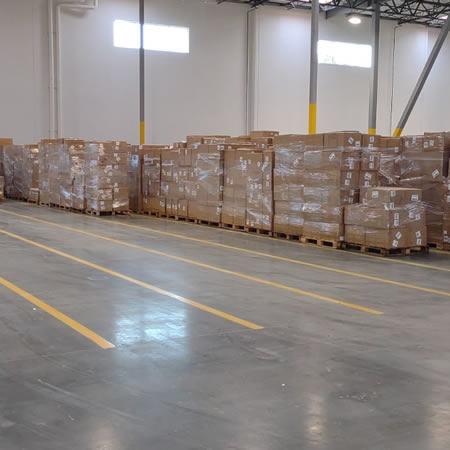
If your aisles see non-stop forklifts, your floor coating has to be stronger, thicker, and faster to return to service. This guide compares multi-layer 100% solids epoxy systems with polyaspartic topcoats so you can choose what works in the Irvine Business Complex and nearby logistics hubs. For a deeper look at build options and scheduling, see our epoxy flooring service for warehouses and production spaces.
At R. E. Temple Coatings & Specialty Services, our commercial painting and flooring team designs coatings that hold up to pallet jack scuffing, impact at dock doors, and chemical drips from maintenance bays. We focus on the right film build, aggregate, and cure window so crews and carriers keep moving.
Why Forklift Traffic Changes Everything
Forklifts push point loads into small tire contact patches. That creates intense abrasion and compression at turn radii, staging lanes, and the first 20 feet inside dock doors. Coatings for offices or light retail are not enough here. You need a high-build, high-hardness system that resists hot tire pickup and scraping from steel forks.
Forklift-rated thickness starts around 30–60 mils in high-traffic aisles. In turn zones or battery rooms, plan even more build and a tougher topcoat that sheds stains and scuffs.
What Matters Most: Dry Time, Hardness, and Thickness
Three specs drive performance in forklift lanes:
- Dry time and return-to-service: Polyaspartic topcoats cure fast. Many projects allow light foot traffic the same day and forklift traffic the next day, depending on temperature and ventilation. Epoxy builds thicker but usually needs more time before heavy loads.
- Hardness: For forklift abrasion, look for Shore D values in the high 70s to 80s or above. Multi-layer epoxy builds bring hardness plus impact resistance. Polyaspartic topcoats add surface toughness.
- Film build: Thickness spreads load and improves wear life. Broadcast quartz or flake builds with multiple coats help reach the target mils while adding traction.
Epoxy Systems Built For Warehouses In Irvine
Multi-layer 100% solids epoxy is the workhorse for forklift lanes and staging areas. A common heavy-duty stack is primer, body coat with quartz broadcast, grout coat, and a chemical-resistant topcoat. This approach evens out surface profile from prep and locks in non-slip texture where operators spin or brake.
Benefits of epoxy in busy Irvine facilities near John Wayne Airport and the Spectrum district include uniform gloss for visibility, options for color-coding lanes, and strong bond over properly profiled concrete. When spills are likely in battery charging zones or maintenance corners, a novolac epoxy layer can increase resistance to acids and solvents.
Polyaspartic Topcoats: Speed And Surface Toughness
Polyaspartic chemistry cures fast and achieves high surface hardness, which helps against scuffs and tire marks. It also handles UV exposure better at dock aprons with open doors and bright sun. In practice, many warehouse teams choose an epoxy build for body strength, then a polyaspartic topcoat for quick return and abrasion resistance.
Typical advantages are rapid recoat windows, lower downtime for picking lines, and less dust pickup during the first days after install. Polyaspartic can be clear or pigmented to match safety plans and line striping.
Head-To-Head: Epoxy Vs. Polyaspartic For Heavy Forklifts
Both systems can work. The better choice depends on your traffic pattern, turn radius hotspots, and wipe-down needs.
- Choose multi-layer epoxy when you want thicker body coats, impact resistance at dock plates, and long wear life between repaints.
- Choose epoxy with a polyaspartic topcoat when speed matters, you need high surface hardness, and you want less downtime for cross-docking schedules.
Plan a return-to-service window that fits your shipping schedule. In most cases, epoxy needs a longer cure before full forklift loads, while polyaspartic topcoats help you get back on the floor sooner. Your actual timing depends on slab temperature, humidity, ventilation, and build thickness.
Surface Prep And Moisture Control In Orange County
Great coatings fail without great prep. Shot blasting or diamond grinding sets the anchor profile and removes old sealers and tire residue. Joints need cleaning and detail work so wheels do not chip edges at impact. If the slab sits over damp soil or recent construction fills, moisture mitigation protects the bond.
Always test slab moisture before coating. High moisture can push blisters under forklift heat. When tests show elevated readings, a moisture vapor product below the build helps safeguard the system.
Chemical Resistance And Safety Markings
Battery rooms, maintenance bays, and staging lanes see oils, detergents, and occasional acid drips. A high-solids epoxy body with a chemical-resistant topcoat gives you a scrub-friendly surface. Polyaspartic topcoats also clean easily and keep gloss under frequent wiping. Color-coding walkways, forklift lanes, and hazard zones helps crews stay safe, especially in the early morning marine layer when floors can look dull.
Ask for clear lane colors, high-contrast safety borders, and skid-resistant textures where operators stop or spin. Use quartz or aluminum oxide for non-slip traction. These aggregates hold up better in constant turning areas than smooth finishes.
Local insight: Coastal mornings in Irvine often bring cooler temps and higher humidity. That can slow cure time. Schedule installs for warmer, drier windows or plan staged areas so shipping keeps moving.
Understanding Shore Hardness And Wear
Shore D hardness is one clue to how a floor will resist cuts and scrapes. Many 100% solids epoxies land in the low-to-mid 80s on Shore D. Polyaspartic topcoats commonly test in a similar range and can feel harder at the surface. Hardness is not the whole story though. Build thickness, aggregate choice, and the quality of surface prep all shape how the coating handles forklift spin, dock plate drops, and pallet drag.
For lane stripes and safety zones, a tough topcoat preserves lines longer so crews keep visual cues. That matters in high-velocity hubs near the Irvine Business Complex where split-second moves reduce bottlenecks.
Thickness Targets And Where To Reinforce
Not every square foot needs the same build. Reinforce turn zones, staging lanes, and the first 20 to 30 feet inside dock doors. Ask for an as-built map that shows where extra mils and aggregates were added. This helps your maintenance team plan touch-ups later without guessing.
In refrigerated or conditioned storage, plan slip-resistant areas at door thresholds where condensation may form. Texture keeps traction consistent without feeling gritty under pallet jack wheels.
Scheduling Around Your Warehouse Operations
We work around shipping waves, quiet night windows, or weekend shutdowns so your team stays productive. Polyaspartic topcoats help tighten those schedules. Epoxy builds give you body strength for the long haul. Often the best answer is a hybrid: epoxy for structure plus a polyaspartic finish to speed reopen time.
If you are coordinating multiple tenants around Von Karman Ave or Alton Pkwy, stage coating areas so aisles remain open. With clear cones, signage, and dust control, neighboring operations stay on track.
Maintenance Habits That Extend Floor Life
Simple routines protect your investment and keep aisles safe:
- Use soft, non-marking tires and keep wheels clean to reduce scuffing at turn zones.
- Place mats at dock doors to catch grit that acts like sandpaper under tires.
- Wipe spills quickly and use pH-appropriate cleaners to prevent haze.
- Protect joints and floor markings with routine inspections and quick touch-ups.
Build a maintenance calendar that notes seasonal humidity shifts and holiday surge weeks. That way, touch-ups do not collide with peak shipments.
How R. E. Temple Coatings & Specialty Services Designs Forklift-Ready Floors
As a commercial painting contractor serving industrial sites across Orange County, we tailor systems to your traffic pattern, loads, and cleaning routine. We start with testing and surface prep, then design a build that matches your environment. Our crews install with clean handoffs so your team knows exactly when foot and forklift traffic can resume. If you need line striping or zone colors, we match your safety plan during the same mobilization for less disruption.
Learn more about system options, including quartz broadcast builds and chemical-resistant topcoats, on our epoxy flooring page. You will see how film build, texture, and return-to-service timing come together for forklift-heavy lanes.
Local Conditions To Consider In Irvine
Warehouses near the airport or along MacArthur Blvd see outdoor air sweeping in at dock doors. Dust and salt in the air can sit on uncured coatings and dull the finish. We plan airflow and cure windows around those patterns so the surface stays clean while it hardens. In warm, dry afternoons, cure tends to speed up. In cool mornings with a marine layer, it can slow. We adjust the plan so your go-live time holds steady.
If your facility spans older and newer slabs, joint movement and surface profile can vary. We tune the prep to each bay so the final finish looks consistent from wall to wall.
Next Steps And A Clear, Low-Disruption Plan
If you want help choosing between multi-layer epoxy and a fast-curing polyaspartic finish, start with a quick site walk. We will map turn zones, inspect dock plates, check moisture, and confirm cleaning chemistry. Then we outline a phased schedule so your team stays productive.
For expert warehouse floor coatings in Irvine, call R. E. Temple Coatings & Specialty Services at 909-643-2353. Let’s build a floor that keeps your forklifts rolling and your crews safe.
Give Your Business A Fresh Look. Contact Our Coatings & Specialty Services Experts Today, We Operate in 5 Counties.