California Parking Lot Striping Laws: ADA Compliance and Stall Layouts
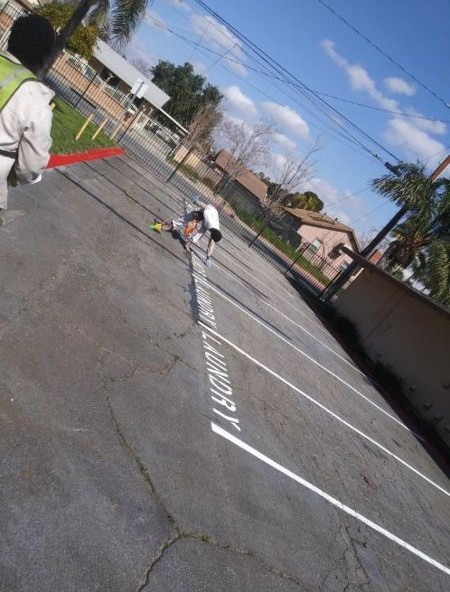
Clear, durable striping is more than curb appeal. In California, it is how you prove your lot is safe and compliant with Title 24 and the ADA. As a commercial painter focused on line work, R. E. Temple Coatings & Specialty Services lays out and stripes lots so visitors can park, walk, and load with confidence.
If you need a pro to verify layouts and re-mark your site, our line striping team can assess, plan, and complete work with minimal downtime. For a plain‑language overview, this guide explains the rules most California properties run into, plus how to check your lot today.
Want a quick refresher on best practices for California parking lot striping? Bookmark this page and share it with your facilities team.
What Title 24 And ADA Require In California Parking Lots
California follows the ADA and adds state-specific details in the California Building Code (Title 24, Chapter 11B). That means accessible parking is not optional and the details matter. Most properties need at least one accessible stall and at least one van-accessible stall, placed on the shortest accessible route to the main entrance.
- Accessible stall size and aisle: California’s code defines minimum stall widths for cars and vans and requires an adjacent access aisle. The access aisle must be level, extend the full length of the stall, and connect to an accessible route.
- Slopes: Keep accessible stalls and aisles at a maximum 2 percent in any direction. Do not let wheelchairs drift downhill because of bad grading or puddling.
- Signs and markings: Post the International Symbol of Accessibility on a blue background at the correct height and add “Van Accessible” at van stalls. Pavement markings must include the accessibility symbol on a blue field where required by code.
- Location and route: Place the required stalls closest to the entrance served and connect them to a curb ramp or flush route without passing behind parked cars.
- Electric vehicle stalls: If EV chargers are provided, check whether accessible EV spaces are triggered and how many must be van-accessible.
California jurisdictions also look for high-visibility blue borders around accessible spaces and clear “NO PARKING” hatching in the access aisle. Some cities extend blue curb practices near accessible spaces for visibility. Always confirm local amendments with your building department or access specialist before final striping.
Designing Stall Layouts That Work In California
Your layout must fit real traffic. Delivery vans, pickups with racks, and compact cars mix in the same lot. Start by choosing a pattern that balances capacity with flow, then set drive-aisle widths that match vehicle movements.
Common, verifiable practices across California:
- 90-degree stalls maximize count and work well for two-way aisles. Use generous aisles to reduce backing conflicts.
- 60-degree angled stalls speed one-way flow and reduce fender taps. Pair with one-way aisles and clear arrows.
- Keep sightlines open at driveways and crosswalks. Avoid placing accessible spaces where vehicles back across the pedestrian path.
- Add loading zones near suites with frequent curbside pick-ups. Use yellow for loading designations and white for general stalls unless your jurisdiction specifies otherwise.
If your lot serves retail peaks or tight turnarounds, consider a brief layout review before paint. Our planners can refine arrows, crosswalks, stop bars, and stall geometry as part of parking lot striping so drivers move naturally without confusion.
Fire Lanes, Red Curbs, And Emergency Access
California fire officials enforce clear access for emergency vehicles. Where the fire code official requires, fire apparatus roads and zones must be marked so drivers cannot mistake them for legal parking. Expect red curbs and “NO PARKING – FIRE LANE” stenciling or approved signs at specific intervals. Many jurisdictions also require a continuous red curb on both sides of narrow drives that serve as fire access.
Widths, turn radii, and sign spacing come from the California Fire Code and your local fire department standards. A common benchmark is a clear drive width sized for large engines, with stencils or signs kept legible over time. Never narrow a marked fire lane during restriping, and replace damaged signs before final inspection.
Local insight: Blue-painted curbs on public streets in California signal disabled parking. In private lots, many jurisdictions want a blue border and a blue field under the accessibility symbol inside the stall. When in doubt, call the local authority having jurisdiction and document their guidance before paint day.
Colors, Materials, And Night Visibility
California properties use a familiar color code: white for general stalls and symbols, yellow where loading or caution is needed, blue for accessible fields and borders, and red for fire lanes. Keep contrast high so markings read in harsh sun, evening shadows, and rain sheen.
Material choices affect how long your lines stay readable:
Durability tip: Use professional traffic-grade coatings. High-build acrylics and thermoplastic stand up to heat and UV better than architectural paints. Where nighttime visibility matters, add glass beads for retroreflectivity. While private lots are not always required to be reflective statewide, many California sites benefit from reflective markings near driveways, crosswalks, and fire lanes.
A Simple Way To Verify Your Lot
Walk the property with a measuring tape, a level app, and this checklist. Photograph each item for your records and to speed any plan review.
- Count total stalls and confirm you have the right number of accessible and van-accessible spaces for the lot size.
- Measure accessible stall width and the full-length access aisle. Check that the aisle connects to an accessible route without steps.
- Check slopes in accessible stalls and aisles. Keep them at or below 2 percent in any direction.
- Confirm the accessibility sign, blue background, and “Van Accessible” where required. Verify sign height and visibility over parked vehicles.
- Inspect pavement symbols and the blue field for wear. Refresh faded borders and “NO PARKING” hatch in the aisle.
- Follow the path to the entry. Crosswalks, curb ramps, and detectable warnings should be direct and obstruction-free.
- Walk the perimeter for red curb fire lanes and “NO PARKING – FIRE LANE” markings or signs. Replace anything unreadable.
Regional Factors Across California
California’s climate beats up striping. Coastal fog and salt air dull paint in beach cities, while Inland Empire heat bakes coatings and makes old lines chalky. Northern valleys see winter rains that lift weak paint and hide faint symbols under road spray. Plan your restriping window around dry weather and curing temperatures recommended by the coating manufacturer.
Truck courts and distribution hubs from the Ports to the I‑10 corridor need wider turning space and heavy-duty markings. Dense downtown lots near hospitals or schools may need extra accessible stalls and tighter pedestrian control. Match the layout to the vehicles and pedestrians you actually serve, not just the drawing you inherited.
How R. E. Temple Coatings & Specialty Services Keeps Your Property Compliant
As a specialty painter for commercial facilities, we build compliance into every step: field verifying slopes and counts, mapping the accessible route, and marking fire lanes that meet your local standard. We coordinate with property managers and inspectors so you get a clear, documented result.
Our process includes a short on-site review of Title 24 details, updated stencils for accessibility symbols, crisp borders and aisle hatching, curb colors, and high-contrast arrows. When you are ready, we schedule off-hours work to reduce traffic disruption. If your markings are fading or your layout changed, we can propose a practical re‑layout and complete the repaint with professional line striping that stands up to California sun and foot traffic.
Get A Compliant, Easy-To-Read Parking Lot
Ready to bring your lot up to code and make it easy for visitors to park and walk safely? Talk with R. E. Temple Coatings & Specialty Services about a quick site assessment and a written striping plan. Call us at 909-643-2353 or schedule service through our line striping page.
Give Your Business A Fresh Look. Contact Our Coatings & Specialty Services Experts Today, We Operate in 5 Counties.