How to Prep and Paint Commercial Concrete Exteriors in Riverside
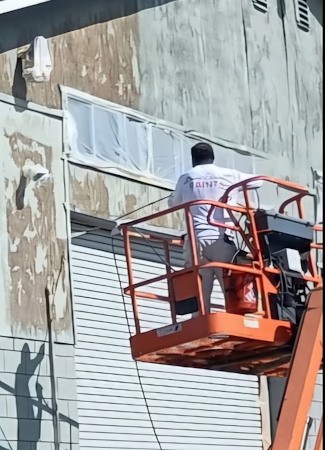
Property managers near Downtown Riverside know the sun can be relentless. If you need commercial exterior painting that stands up to Inland Empire heat, start with a plan that matches our climate and building types. This guide explains the professional process R. E. Temple Coatings & Specialty Services follows for tilt-up concrete, including washing PSI ranges, moisture testing, and high-durability elastomeric coatings. For deeper details on scope and scheduling, see our commercial exterior painting service page.
Why Riverside’s Heat Demands a Different Exterior Spec
Riverside summers bring high UV, hot west-facing walls, and dry winds. Tilt-up panels expand and contract all day, which stresses joints and thin coatings. Add dust from the 60 and 215 corridors, and ordinary paint fails early.
- Strong sun breaks down weak binders and fades color fast.
- Midday surface temps climb far above the air temperature, especially on west elevations downtown and in Sycamore Canyon.
- Wind gusts push overspray and dust onto fresh film around Market Street and University Avenue storefronts.
The fix is not “more paint.” It is choosing the right coating system, confirming the concrete is ready, and applying within the right weather window.
Pre-Job Assessment Checklist for Tilt-Up Concrete
Before any coating goes on, a pro team documents the starting point. That keeps surprises off your punch list and helps future maintenance.
- Always confirm moisture content and pH before primer. A plastic sheet test per ASTM D4263 (sealed to the wall for about 16 hours) should show no condensation or darkened concrete. Pair it with an electronic moisture reading per the coating manufacturer’s limits, then verify surface pH is within the coating’s acceptable range.
- Map hairline cracks, panel joints, and previous patch locations. Note active movement vs. static cracks.
- Identify existing coatings. Hard, glossy films may need deglossing or specialized primer.
- Log shade patterns by elevation. West sides near late-day traffic heat up fastest; schedule them earlier or later in the season.
If the assessment flags heavy chalking or contamination, plan added prep and primer. When pressure washing is part of the scope, fold in a coordinated schedule with commercial pressure washing so the surface is clean and dry before coatings arrive.
Cleaning and Surface Prep That Protects the Concrete
Concrete can take pressure, but edges, joint sealants, and previous patches cannot. That is why pros vary settings by area:
On sound tilt-up panels, washing typically targets 2,500 to 3,000 PSI using a 15–25 degree tip, keeping the nozzle about 6–12 inches off the face. Around control joints, sealants, window perimeters, and repaired spots, drop closer to 1,500–2,000 PSI and widen the fan to avoid etching. Rinse until runoff is clear. Allow adequate dry time, then re-check with moisture testing before primer.
Chalky surfaces get a bonding primer designed for masonry. Spalls or bugholes are patched with compatible materials and tooled smooth. Movement joints are not filled with patching compounds; they get a flexible sealant and backer rod sized to the joint.
Joint and Crack Treatment Built for Movement
California tilt-up buildings move through big daily swings. Joints that are painted over without flexible sealant will crack again.
Pros install foam backer rod and a high-quality urethane or silyl-terminated polyether sealant, then allow full cure before coating. Tooling keeps sealant concave for stretch. Static cracks are routed and filled, then bridged with a compatible elastomeric patching compound so the finish remains uniform.
Never seal moving joints with paint alone. Paint is a film, not a joint material, and it cannot absorb movement without cracking.
Choosing Elastomeric Coatings for Inland Empire Sun
For Riverside’s UV and heat, a 100% acrylic elastomeric is usually the workhorse on concrete. It resists sun, sheds water, and bridges hairline cracks better than standard paint.
What a durable spec includes:
- Primer matched to the substrate condition: masonry bonding primer for chalky or porous panels, stain-blocking primer if tannins or rust are present.
- Two full coats of elastomeric, aiming for a high-build finish. Back-rolling after spray helps close pinholes and improves film uniformity.
- Light, heat-reflective colors on west and south elevations to reduce thermal load in places like Hunter Park and Airport-area logistics buildings.
Ask your contractor to document wet-film and dry-film checks so the system meets the manufacturer’s target build across the whole facade, not just the test patch.
Application Windows and Weather Limits
In Riverside, the right time of day matters. Smart scheduling avoids blistering surfaces and flash-dry problems that can trap moisture.
Use these guardrails during application:
- Do not coat when the wall or air is above 100°F. Ideal application often sits between 60°F and 85°F, and many manufacturers call for air and surface above 50°F.
- Keep the surface at least 5°F above the dew point. This reduces the risk of condensation that can cause loss of adhesion.
- Watch wind. Sustained winds over about 15 mph and gusts raise overspray risk along Market Street, Jurupa Avenue, and similar corridors.
- Protect fresh film from overnight moisture and schedule west-facing elevations away from the hottest part of the afternoon during July through September.
Pros confirm these limits with an infrared thermometer and a hygrometer before each elevation. That small step prevents callbacks.
Local tip: On hot summer days, rotate crews by elevation. Start the east and north sides first, then switch to shaded zones in the afternoon. This simple sequence keeps film from skinning too fast and improves adhesion.
Quality Control That Keeps Paint on the Wall
Good-looking from the street is not enough. A Riverside facade needs numbers to back up the finish.
Pro teams spot-check adhesion on cured samples, verify film thickness with a wet-film gauge during application, and record substrate temperature and dew point by elevation. Touch-ups are blended edge-to-edge to avoid lap marks on large, flat panels common in business parks off Alessandro Boulevard.
Color, Sheen, and Long-Term Appearance
Elastomeric systems are usually low-sheen to help disguise panel variations and reduce glare. For brand colors on monument features, a high-performance acrylic topcoat may ride over the elastomeric base, provided the manufacturer approves the stack. Light, clean hues reflect heat and keep walls closer to the comfort zone, especially on west exposures downtown and near Mission Grove.
Ask for a small-scale mockup on the building. Sunlight changes how colors read along Mission Inn Avenue compared to shaded streets, and a mockup avoids rework.
Tenant and Public-Side Coordination
Downtown blocks can be tight. A professional plan sequences noisy washing, boom-lift setup, and coating to avoid peak delivery and lunch hours. Crews post notices, protect vehicles, and control overspray with wind screens and tip selection. Done right, most storefronts stay open with minimal interruption.
What You Can Expect From a Professional Riverside Team
With R. E. Temple Coatings & Specialty Services, you get a clear scope, documented checkpoints, and communication that fits the way Riverside properties operate. Early in the process we map each elevation, verify moisture and pH, and schedule work for the best weather window. When you need added trades like washing or interior refresh, our commercial painting team can coordinate so your timeline does not slip.
If you want to learn more about systems built for local sun and wind, explore how our commercial exterior painting service approaches high-build coatings, joint details, and film-thickness checks on large tilt-up walls.
Riverside-Specific Watchouts
These issues show up often around Riverside and the nearby logistics corridors:
- Unsealed or failed panel joints that let hot, dry air in by day and pull cool night air through the wall, stressing coatings at the seam.
- Patchy film build where spray passes were rushed during afternoon heat. Back-rolling fixes this and gives a consistent membrane.
- High pH on new or recently repaired concrete. Allow adequate cure, rinse thoroughly, and verify pH and moisture before primer.
When you align prep, product, and weather, coatings last longer and look better. That is why the spec is as important as the color card.
Ready to Protect Your Tilt-Up Concrete in Riverside?
Whether you manage a storefront near the Mission Inn or a warehouse in Hunter Park, you can expect a finish that handles heat, wind, and daily use. For a full building review and a written plan, call 909-643-2353 or learn how our team approaches exterior systems for local climates. Many property managers start by reviewing commercial exterior painting in Riverside on our home base to see how the pieces fit.
When it is time to move, schedule with R. E. Temple Coatings & Specialty Services and get a coating system built for our Inland Empire sun. Ask us to include documented moisture and pH results, wet-film readings, and joint details in your closeout so maintenance stays simple. Your building will thank you every summer.
To coordinate a site walk and confirm the best weather window, reach out to our team or read what goes into our professional exterior painting for commercial buildings process.
Give Your Business A Fresh Look. Contact Our Coatings & Specialty Services Experts Today, We Operate in 5 Counties.